Policy & advocacy
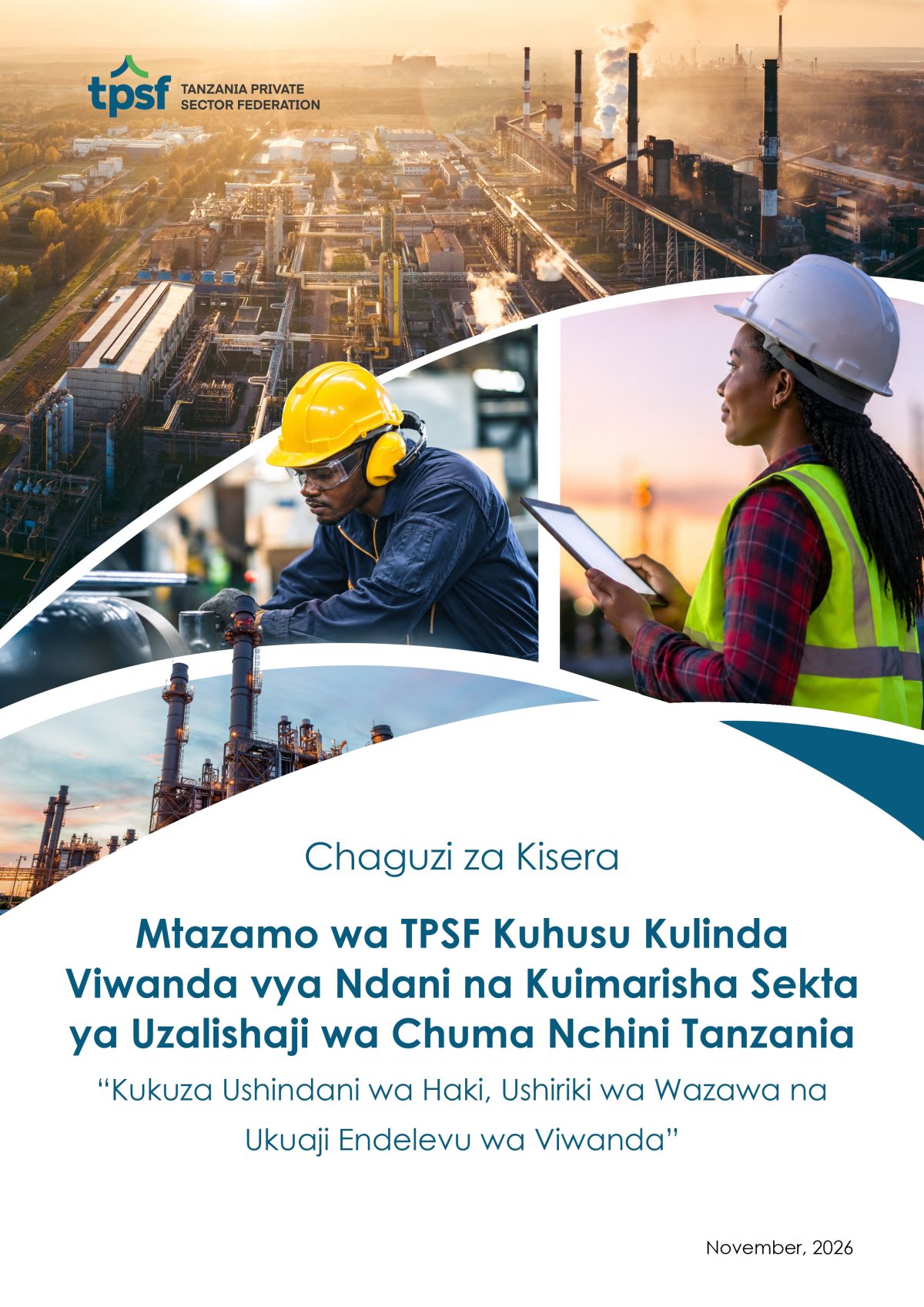
Sekta ya uzalishaji wa chuma nchini Tanzania ina mchango mkubwa katika kukuza uchumi, viwanda na maendeleo ya miundombinu. Kupitia waraka wake wa sera wenye kichwa “Mtazamo wa TPSF kuhusu Kulinda Viwanda vya Ndani na Kuimarisha Sekta ya Uzalishaji wa Chuma Tanzania,” TPSF inasisitiza umuhimu wa ushindani wa haki, matumizi ya bidhaa zinazozalishwa nchini na ukuaji endelevu wa viwanda. Waraka huu unaainisha changamoto zinazokabili wazalishaji wa ndani na kupendekeza hatua za kisera za kuimarisha uzalishaji wa ndani, kutoa kipaumbele kwa bidhaa za Tanzania na kuongeza ushindani wa sekta ya chuma.
21 downloads
Download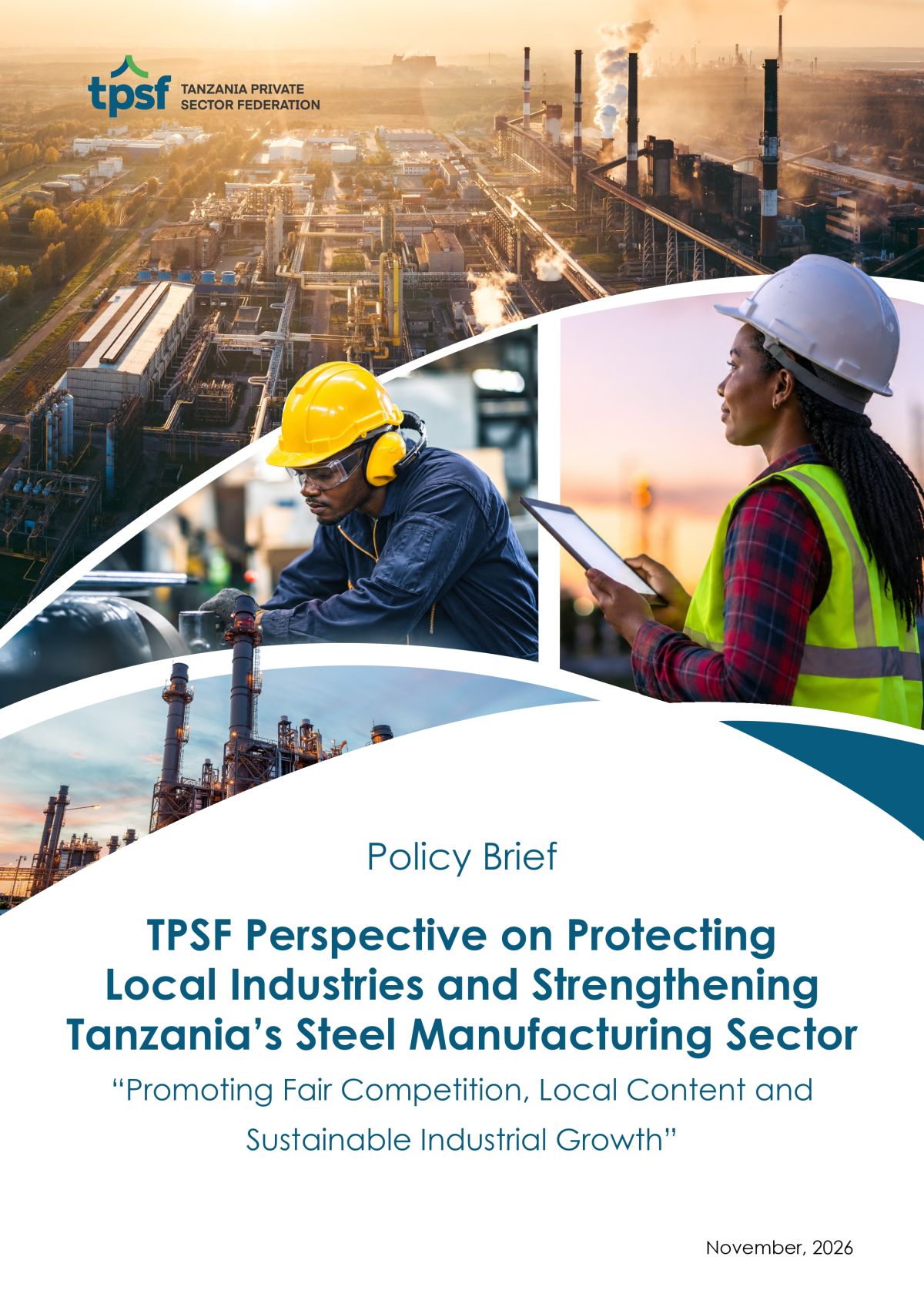
Tanzania’s steel manufacturing sector is vital to industrialisation, job creation and economic growth. Through its policy brief, “TPSF Perspective on Protecting Local Industries and Strengthening Tanzania’s Steel Manufacturing Sector,” TPSF highlights the need to promote fair competition, local content and sustainable industrial growth. The brief outlines key challenges facing local manufacturers and proposes policy measures to strengthen domestic production, prioritise locally manufactured products and enhance the competitiveness of Tanzania’s steel industry.
21 downloads
Download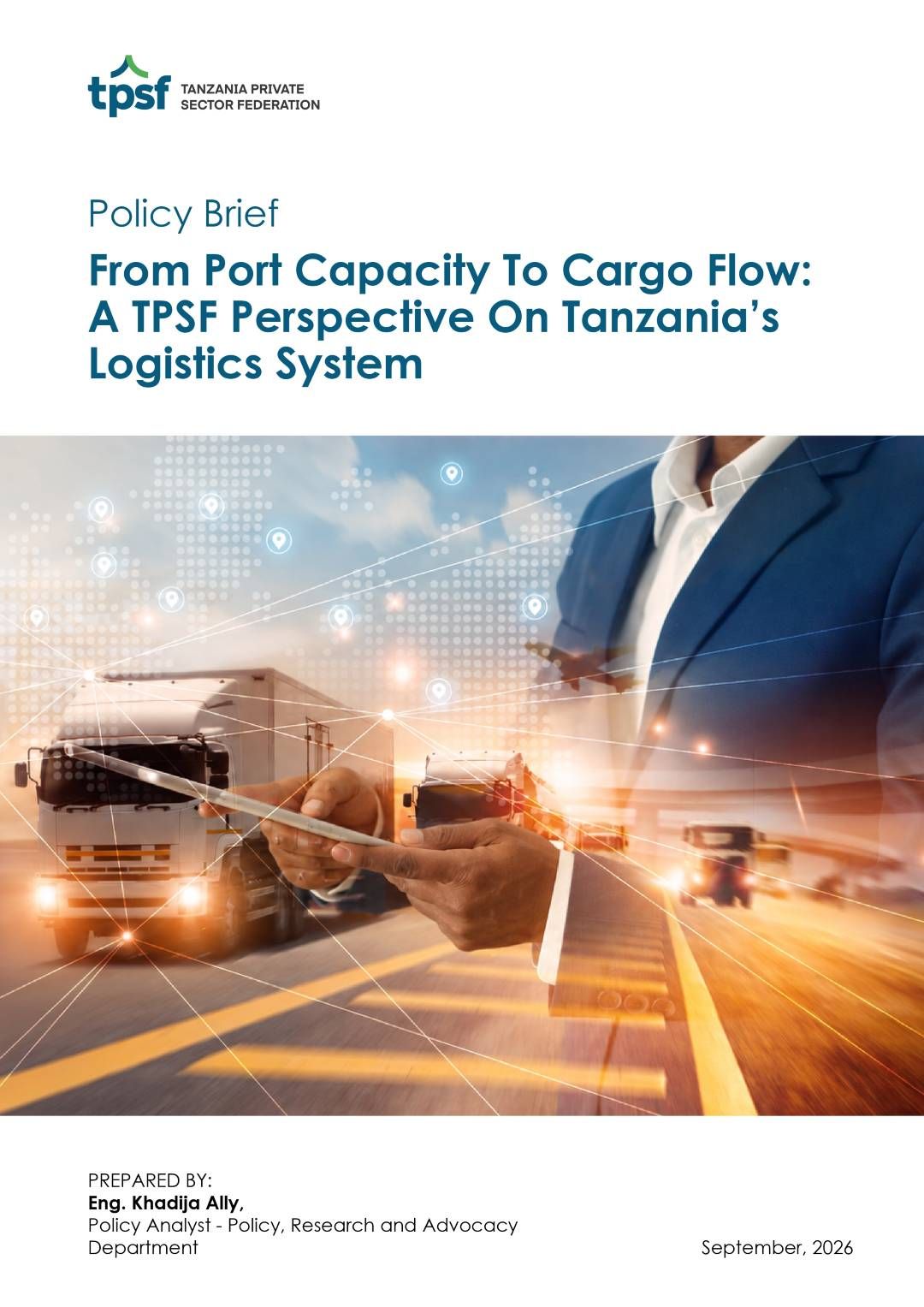
Tanzania’s growing cargo volumes reflect expanding trade, investment and the country’s increasing role as a regional logistics gateway. Dar es Salaam Port handled more than 33 million tonnes of cargo in FY2025/26, reaching a level initially projected for 2030. This growth is encouraging, but it also places greater importance on the efficiency of the wider logistics system. As cargo volumes increase, the effectiveness of the port will increasingly depend on how efficiently cargo moves through ICDs, dry ports, railways, roads, customs and related digital systems. The Tanzania Private Sector Federation (TPSF) view is that the next phase of logistics development should complement infrastructure expansion with greater efficiency across the logistics network, ensuring that cargo moves seamlessly from the port to its final destination.
329 downloads
Download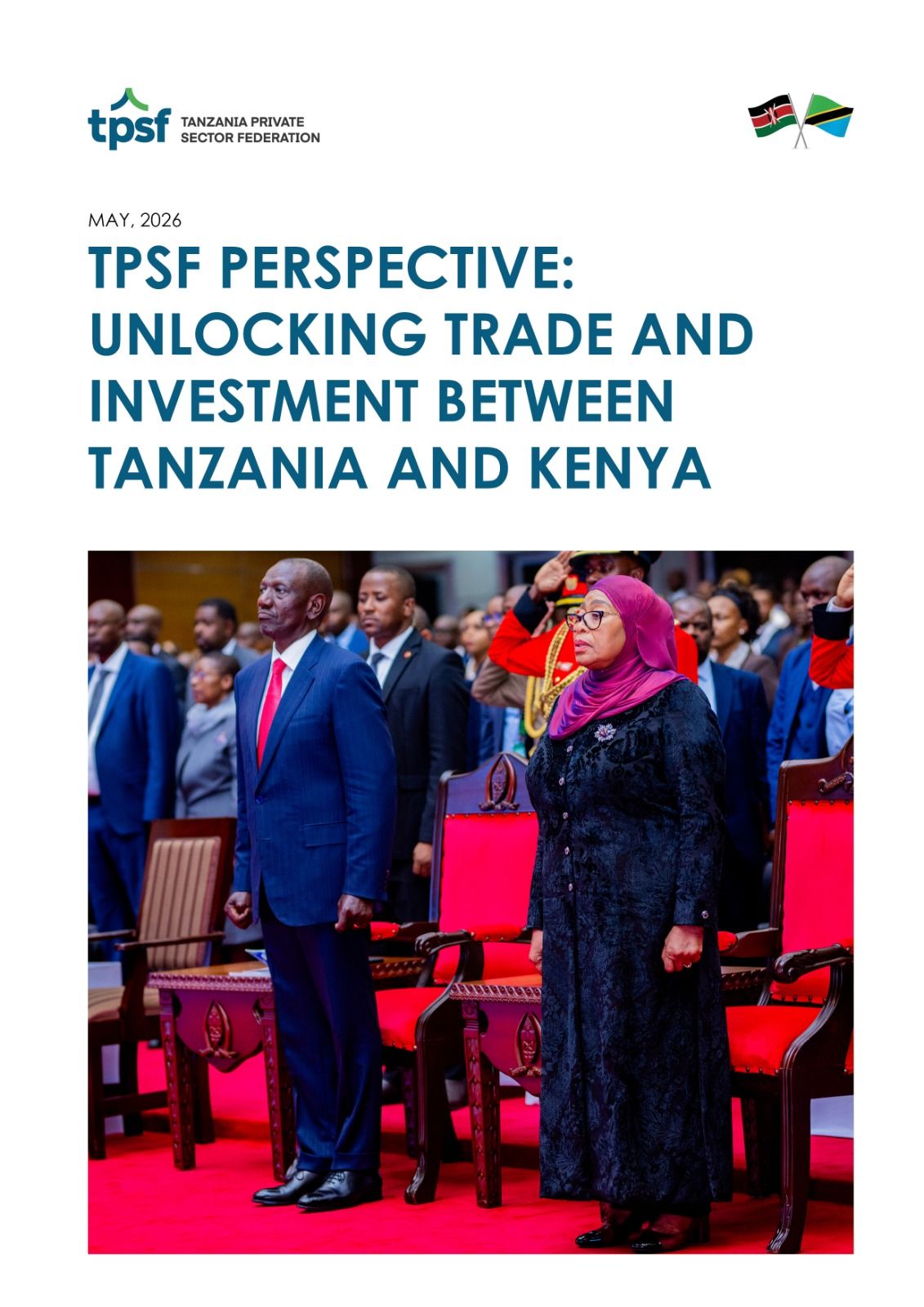
The Tanzania–Kenya Business Forum 2026 marked an important shift in the relationship between the two countries, moving from dialogue toward practical implementation.
551 downloads
Download
Tanzania’s economy is growing but a harder question lingers beneath the headline numbers: who actually owns it? Foreign direct investment reached a record high in 2024, yet Tanzanians remain largely traders in an economy whose productive engine is built and owned by external capital. This note argues that Vision 2050 will not be reached through trade, but through a deliberate shift from commerce to capital, from participation to ownership.
474 downloads
Download